Heavenly Father, God of Abraham, Isaac, and Jacob — in the courts of Heaven, as Issachar scribes and ambassadors of Christ (Malachi 2:7), we decree: Remember Lot’s wife (Luke 17:32). Deliver Your people fully from every backward glance, every lingering compromise, and every cave of fear. Break the chains of generational collateral damage from Sodom to Baal Peor. Purify marriages in one-flesh unity (Genesis 2:24; Malachi 2:15-16; Hebrews 13:4). Raise up discerning leaders who warn against the doctrine of Balaam (Revelation 2:14). Let no heart look back (Luke 9:62). Let the refiner’s fire cleanse (1 Peter 1:7; Zechariah 3:2), boundaries stand firm (Psalm 1:1-3), and the vineyard of El Paso/Juárez bring forth blessing instead of curse (Isaiah 5; John 15). Come out of her, My people, lest you share in her sins and receive of her plagues (Revelation 18:4). Turn every intended evil into good (Genesis 50:20; Romans 8:28). We press forward to the upward call in Christ Jesus (Philippians 3:13-14). In the mighty name of Jesus, Amen.
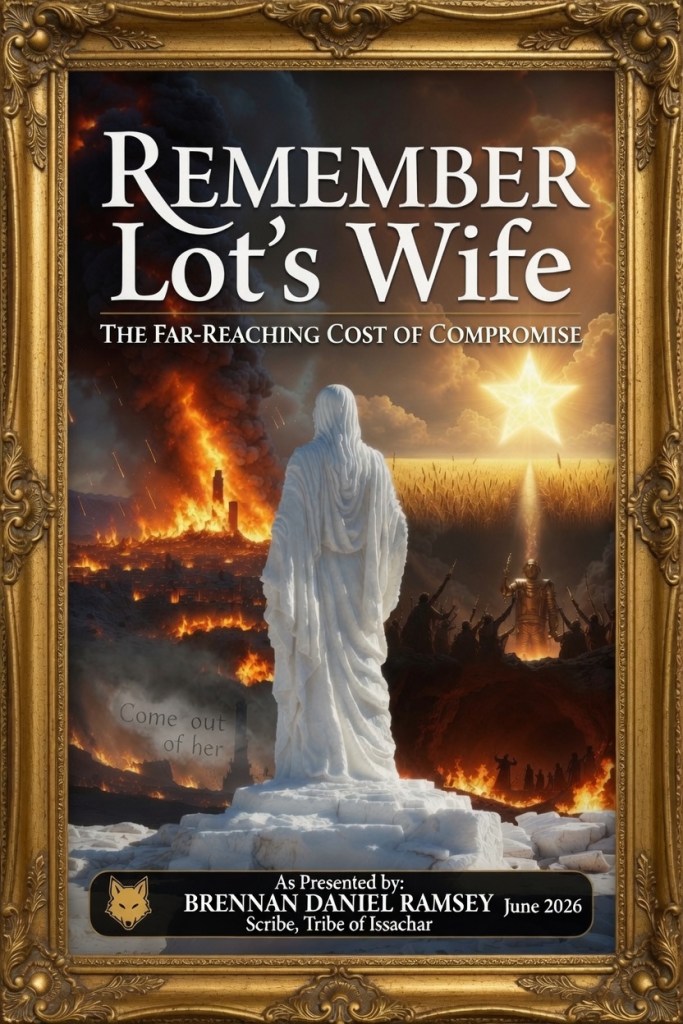
Remember Lot’s Wife: The Far-Reaching Cost of Compromise — From Sodom’s Glance to Baal Peor and the Call to Full Deliverance
“Remember Lot’s wife.” (Luke 17:32, NKJV)
Thus declares the Lord Jesus in the context of the days of the Son of Man, when judgment comes suddenly as in the days of Noah and the days of Lot (Luke 17:26-30). He warns of the peril of divided loyalty: “Whoever seeks to save his life will lose it, and whoever loses his life will preserve it” (Luke 17:33). The command stands as a pillar of warning amid separation and deliverance — a warning that echoes into the apocalyptic messages of Revelation.
The Account in Genesis: Backward Glance, Lingering Compromise, and Rebellion The angels urged Lot and his household: “Escape for your life! Do not look behind you nor stay anywhere in the plain. Escape to the mountains, lest you be destroyed” (Genesis 19:17). They seized Lot, his wife, and his two daughters by the hand and brought them out of the city (Genesis 19:16). Yet Lot’s wife looked back behind him, and she became a pillar of salt (Genesis 19:26). Her heart remained tethered to Sodom under judgment.
Lot himself lingered (Genesis 19:16), negotiated his own plan instead of fully obeying the command to the mountains, and received permission to flee to Zoar (Genesis 19:18-22). Even then, fear drove him further: “Then Lot went up out of Zoar and dwelt in the mountains, and his two daughters were with him; for he was afraid to dwell in Zoar. And he and his two daughters dwelt in a cave” (Genesis 19:30).
This pattern of partial obedience and self-reliance illustrates the solemn truth spoken to Saul:
“Has the Lord as great delight in burnt offerings and sacrifices, As in obeying the voice of the Lord? Behold, to obey is better than sacrifice, And to heed than the fat of rams. For rebellion is as the sin of witchcraft, And stubbornness is as iniquity and idolatry. Because you have rejected the word of the Lord, He also has rejected you from being king.” (1 Samuel 15:22-23, NKJV)
Isolated in the cave, believing no one else survived, the daughters—formed by Sodom’s culture—took matters into their own hands: “Come, let us make our father drink wine, and we will lie with him, that we may preserve the lineage of our father” (Genesis 19:32; see also v. 34). Thus were born Moab (“from my father”) and Ben-Ammi (Ammon, “son of my people”) (Genesis 19:36-38). One backward glance, one failure to fully flee and trust God’s provision, produced generational compromise rooted in rebellion against simple obedience.
Collateral Damage:Moab, Ammon, and How Israel Became Joined to Baal of Peor
From this darkened origin arose nations that became persistent adversaries to Abraham’s seed, Israel. The principle holds: “A little leaven leavens the whole lump” (1 Corinthians 5:6; Galatians 5:9). “The iniquities of the fathers upon the children to the third and fourth generations” (Exodus 34:7; Numbers 14:18), yet mercy awaits the repentant.
Centuries later, as Israel approached the Promised Land, Balak king of Moab feared them and hired Balaam son of Beor, a prophet known for sorcery, to curse God’s people (Numbers 22:1-6).
God sovereignly overruled Balaam’s intent: “How shall I curse whom God has not cursed? And how shall I denounce whom the Lord has not denounced?” (Numbers 23:8)
“God is not a man, that He should lie, nor a son of man, that He should repent. Has He said, and will He not do? Or has He spoken, and will He not make it good?” (Numbers 23:19)
Balaam blessed Israel four times (Numbers 23–24), prophesying the Messiah: “I see Him, but not now; I behold Him, but not near; a Star shall come out of Jacob; a Scepter shall rise out of Israel” (Numbers 24:17).
Yet Balaam “loved the wages of unrighteousness” (2 Peter 2:15; Jude 1:11). He counseled Balak on a subtler strategy: seduction into idolatry and sexual immorality at Baal Peor (Numbers 31:16).
The Moabite and Midianite women, acting on this counsel, drew near to the Israelite camp. Scripture records exactly how Israel became joined to the snare:
“Now Israel remained in Acacia Grove, and the people began to commit harlotry with the women of Moab. They invited the people to the sacrifices of their gods, and the people ate and bowed down to their gods. So Israel was joined to Baal of Peor, and the anger of the Lord was aroused against Israel. Then those who died in the plague were twenty-four thousand.” (Numbers 25:1-3, 9, NKJV)
Thus, through the pathway of compromised seduction—harlotry, shared meals at pagan sacrifices, and bowing to false gods—Israel became joined to Baal of Peor. Phinehas’ zeal stopped the plague (Numbers 25:7-13), but the collateral damage was severe—judgment upon God’s people rooted in Lot’s household compromise generations earlier. Moab and Ammon repeatedly oppressed Israel (Judges 3:12-30 — Eglon’s 18-year oppression; Judges 10–11), joined coalitions against Judah (2 Chronicles 20), and introduced snares of idolatry, including Molech’s child sacrifice (Leviticus 18:21; 2 Kings 3:27). Deuteronomy 23:3-6 barred them from the assembly “to this day” for refusing aid and hiring Balaam against Israel.
This chain warns clearly:incomplete deliverance (looking back, lingering, cave-like isolation and self-reliance) multiplies into national stumbling blocks, plague, and enmity — for rebellion is as the sin of witchcraft (1 Samuel 15:23).
Revelation’s Warning:The Doctrine of Balaam Endures The risen Christ directly confronts this same compromise in the churches of Revelation.
To the church in Pergamum He declares: “But I have a few things against you, because you have there those who hold the doctrine of Balaam, who taught Balak to put a stumbling block before the children of Israel, to eat things sacrificed to idols, and to commit sexual immorality.” (Revelation 2:14, NKJV)
This is no ancient relic — it is an active threat to the end-times church. The same seductive mixture of idolatry and immorality that flowed from Lot’s compromise through Balaam and Baal Peor (where Israel became joined) persists. Similar warnings appear against Jezebel’s teaching in Thyatira (Revelation 2:20-23). Christ calls for repentance, or He will come with judgment.
Further, Revelation echoes the urgent call to separate fully, just as Lot’s family was commanded to flee without looking back:
“And I heard another voice from heaven saying, ‘Come out of her, my people, lest you share in her sins, and lest you receive of her plagues.’” (Revelation 18:4) Babylon the Great — the ultimate Sodom-like system of the last days — faces fiery judgment (Revelation 18:8-10, 18-19; cf. Genesis 19:24). Those who linger or look back with longing risk sharing her plagues. Yet the overcomers receive the promise: “He who overcomes shall inherit all things, and I will be his God and he shall be My son” (Revelation 21:7).
Sovereign Redemption Amid the Darkness
Even from this compromised lineage, the Lord wove redemption: Ruth the Moabitess, descendant of Moab, chose Israel’s God—“Your people shall be my people, and your God, my God” (Ruth 1:16)—and entered the line of David and the Messiah, Jesus Christ (Ruth 4; Matthew 1:5).
Naamah the Ammonitess also appears in the Davidic line (1 Kings 14:21). “But where sin abounded, grace abounded much more” (Romans 5:20). God turns curses into blessings and intended evil into good (Genesis 50:20; Romans 8:28).
New Testament Warnings and the Call to Holiness Jesus’ command echoes through the apostles and into Revelation:
“No one, having put his hand to the plow, and looking back, is fit for the kingdom of God.” (Luke 9:62)
“Do not love the world or the things in the world. If anyone loves the world, the love of the Father is not in him.” (1 John 2:15)
“For Demas has forsaken me, having loved this present world…” (2 Timothy 4:10) “Therefore, if anyone is in Christ, he is a new creation; old things have passed away; behold, all things have become new.” (2 Corinthians 5:17)
“Brethren, I do not count myself to have apprehended; but one thing I do, forgetting those things which are behind and reaching forward to those things which are ahead, I press toward the goal for the prize of the upward call of God in Christ Jesus.” (Philippians 3:13-14)
The doctrine of Balaam persists as a warning to the churches (Revelation 2:14; cf. Jude 1:11).
Applications for Today: Personal Integrity, Marriage, Church, and Border Intercession as scribes of Issachar (1 Chronicles 12:32; Malachi 2:7), ambassadors of Christ, we decree from the courts of Heaven the very prayer offered above. Apply this truth boldly in light of Revelation’s urgency and the rebuke of 1 Samuel 15:22-23:
Personal Integrity and Boundaries(Psalm 1:1-3): Build firm separation from Sodom’s ways. Refuse the backward glance or cave of fear that breeds compromise and rebellion. Come out fully (Revelation 18:4) before becoming joined to any modern Baal Peor. To obey is better than sacrifice.
Marriage and Family: Lot’s divided household produced generational enemies. Husbands and wives must flee together in one-flesh unity, honoring the marriage bed — guarding against seductive snares that join hearts to idols.
Church and Leadership: Warn against Balaam-like snares and Jezebel influences (Revelation 2). Discern wheat and tares until harvest (Matthew 13:24-30). True love warns while extending restoration.
El Paso/Juárez and Beyond:Intercede against modern Baal Peor snares fracturing families. Decree full deliverance: no lingering, no looking back, lest we share in Babylon’s plagues (Revelation 18:4).
 Brennan Daniel Ramsey - Veteran